The 6 best Hume alternatives for developers, tested July 2026
The best Hume alternative for text-to-speech in 2026 is SpeechifyAI: Simba 3.2 ranks well above Octave on Artificial Analysis' blind Speech Arena, at $10 per 1M characters, a fraction of Octave's $50-to-$150, with emotion control and self-serve cloning. ElevenLabs (breadth), OpenAI (promptable), Cartesia (latency), Rime (telephony) and Deepgram (STT plus TTS) round out the list. We tested every one hands-on.
 Luke OliffDeveloper Relations · SpeechifyAI Labs
I spent an afternoon this July doing something I recommend to anyone evaluating voice AI vendors: I opened every serious Hume competitor in a clean browser, tried to make each one say the same sentence, and wrote down what actually happened. Not what the landing pages promise. What happened.
The test passage, for the record: “Before we ship on Thursday, can you re-run the 4,096-token benchmark? Last night’s build cut latency from 210 to 87 milliseconds, which honestly surprised everyone.” Numbers, an abbreviation, a question, a dry aside. If a model mangles any of those, you hear it immediately.
This page is the result. It is a working document (the tested-on date above is real, and we re-verify prices when it changes), and because SpeechifyAI is on its own list, every claim here links to a source you can check without trusting us.
Why developers leave Hume
Let me be fair to Hume first, because it is doing something genuinely distinctive. Hume comes at speech from emotion-science research, and Octave, its text-to-speech, is built to be directed in natural language (“sound like a tired night-shift nurse delivering good news”) rather than just voiced. Its EVI line does full empathic speech-to-speech conversation. For interactive characters, companions and mental-health-adjacent products, nothing else in this comparison is aimed as squarely at the job, and voice cloning is unlimited on every tier, including Free. If emotional direction is the product, Hume earned its place on the shortlist.
Two things push developers to look elsewhere anyway.
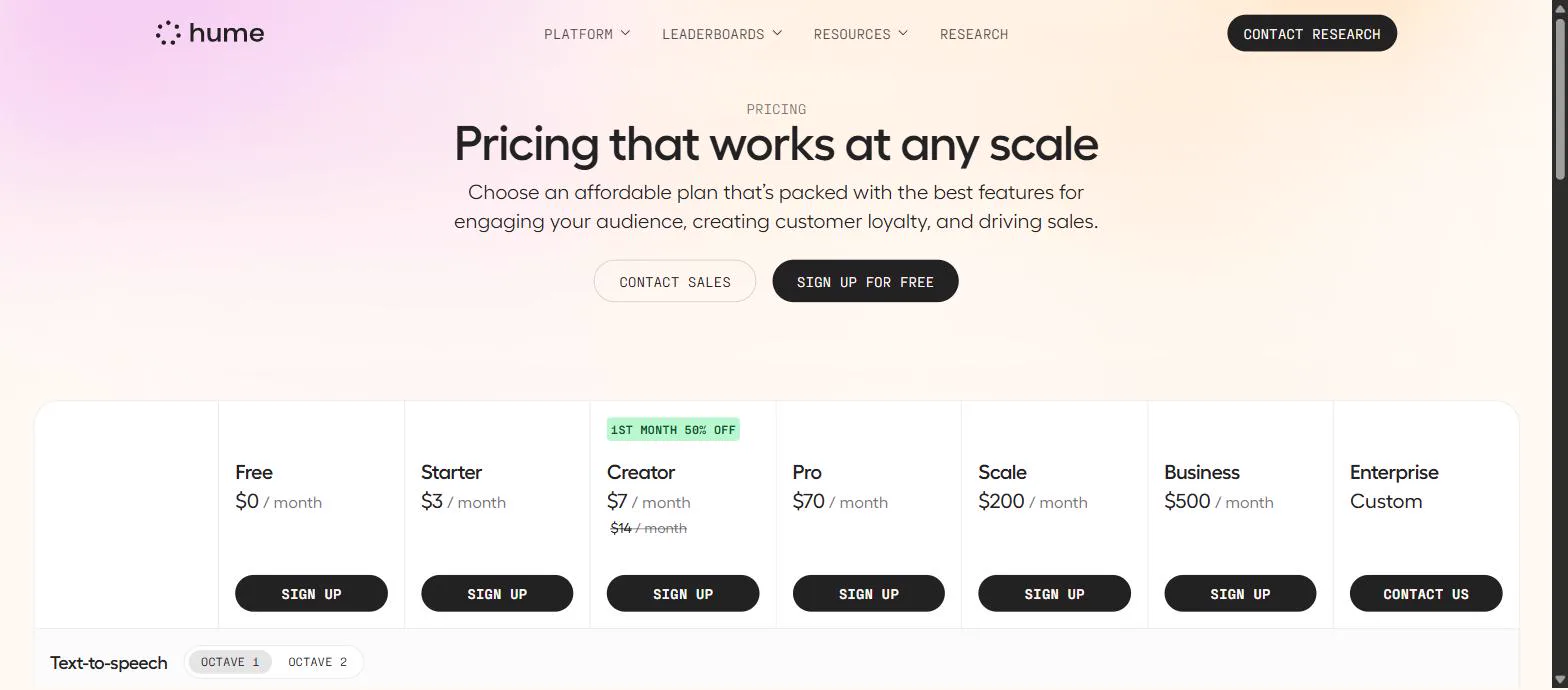
It is a specialty spend, not a saving. On the pricing page Octave is plan-gated rather than flatly usage-priced: Free gives 10K characters a month, Creator gives 140K, and the overage rate falls from $0.15 per 1K on the entry plans to $0.05 per 1K on the $500 Business tier. That works out to $50 to $150 per 1M characters, so at small scale Hume costs what ElevenLabs costs, for a different specialty rather than a discount. If you are optimizing cost per character for anything high-volume, the math does not favor it.
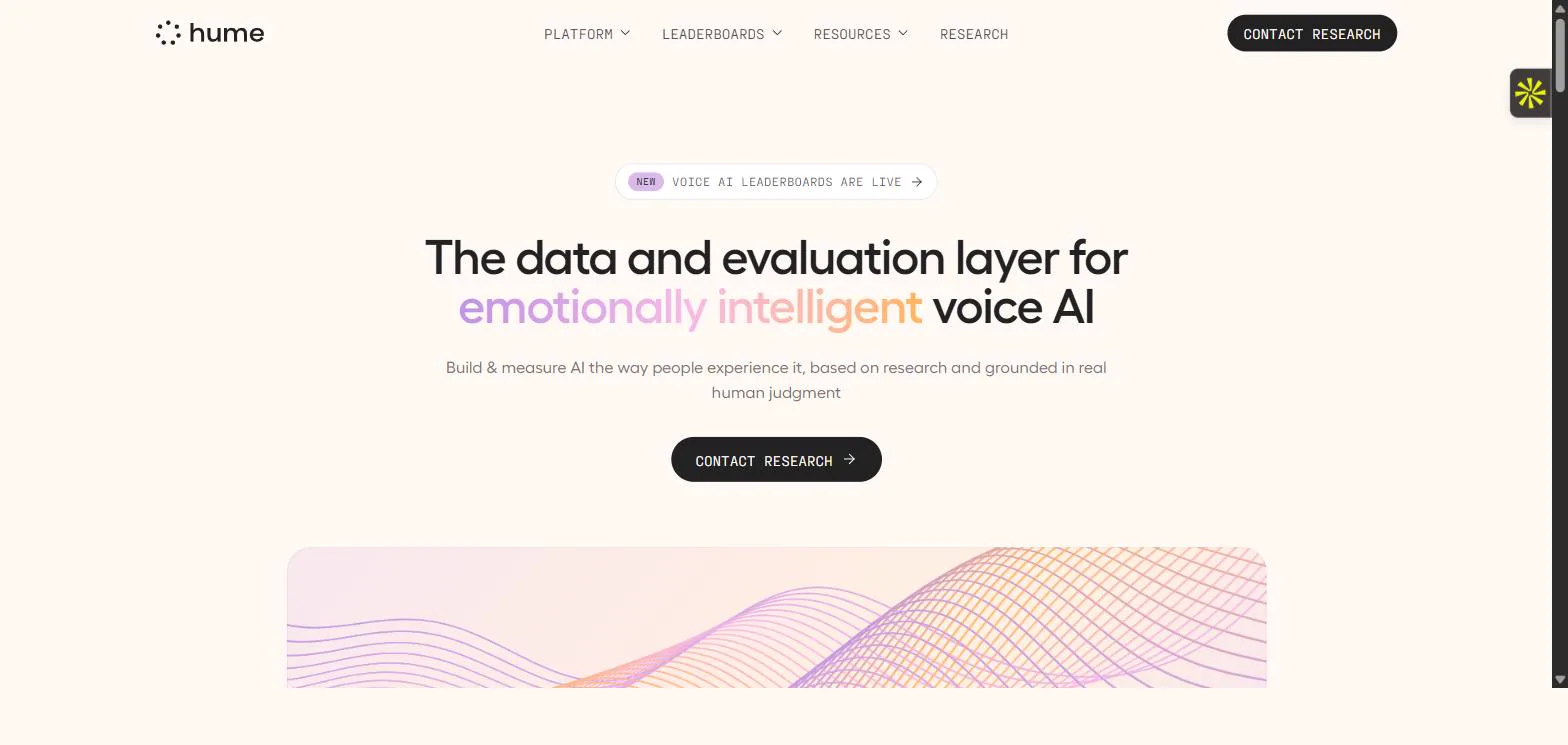
The company’s center of gravity is moving toward evaluation, not TTS. Hume’s homepage now bills the company as “the data and evaluation layer for emotionally intelligent voice AI,” leading with its voice-AI leaderboards and human-feedback research rather than the synthesis product. That is a fine thing to be, but if you are integrating a production voice you want a vendor whose main event is the voice. Octave is one product inside a research-and-evaluation company, and on raw naturalness it ranks mid-pack (more on that next).
None of this makes Octave a bad product. It makes it a specialist you should price against generalists before you build on it, which is what the rest of this page is for.
How I ranked quality
A vendor telling you their model sounds best is worthless, including when the vendor is us. So this list leans on the one public benchmark that works like a proper blind test: Artificial Analysis’ Speech Arena, where listeners hear two unlabeled clips and pick the better one, producing an Elo score with confidence intervals.
In July 2026 the provider-voices board had Alibaba’s Qwen-Audio-3.0-TTS-Plus at Elo 1,235, SpeechifyAI’s Simba 3.2 at Elo 1,240, Google’s Gemini 3.1 Flash TTS at Elo 1,215 and Cartesia’s Sonic 3.5 at Elo 1,208. Hume’s Octave 2 sits at Elo 1,056, which is the useful context Hume’s own emotion-first marketing does not give you: the emotional direction is real, but the underlying naturalness is mid-pack, not leading.
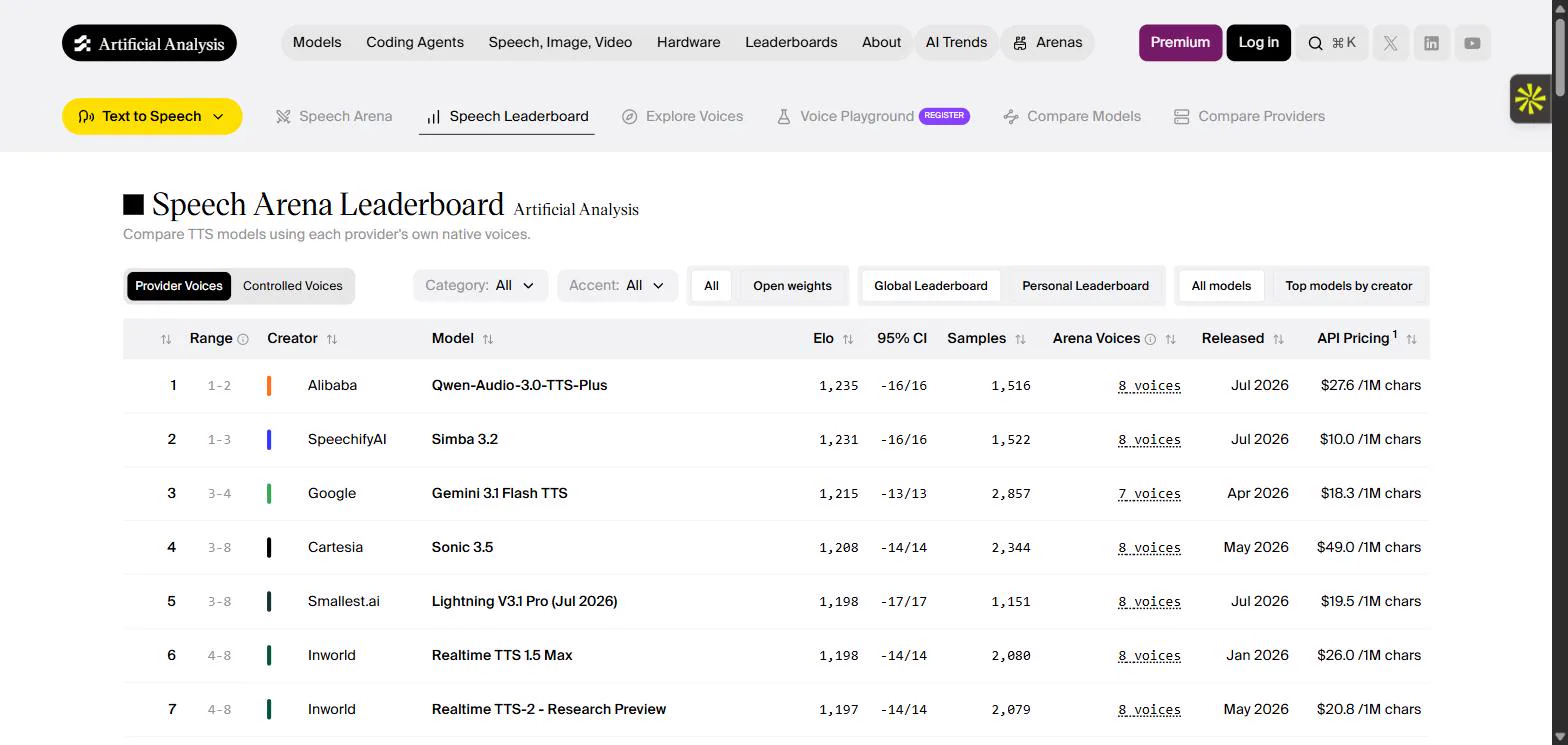
Keep that price column in view as you read the breakdowns. The gap between a leaderboard-scored voice at $10 and Octave’s specialty pricing is the single most useful fact on this page.
The comparison at a glance
| Platform | Model tested | Price per 1M chars (API) | Free tier | Arena Elo | Self-serve cloning |
|---|---|---|---|---|---|
| SpeechifyAI | Simba 3.2 | $10 (Starter) to $6 (Scale) | 500K chars/mo | 1,240 | Yes, from $10 |
| ElevenLabs | Eleven v3 / Flash v2.5 | $100 / $50 | ~10K chars/mo | 1,175 | Yes, paid tiers |
| OpenAI | gpt-4o-mini-tts | Token-priced (tts-1: $15) | None (pay as you go) | 1,103 (tts-1-hd) | No (sales-gated) |
| Cartesia | Sonic-3.5 | $49 (per Artificial Analysis) | 20K credits (~27 min)/mo | 1,208 | Yes, from $5 |
| Rime | Coda | $50 (Starter) | 3,000 minutes | 1,042 | Enterprise |
| Deepgram | Aura-2 | $30 | $200 credit, no card | Not ranked | No |
| Hume (baseline) | Octave 2 | $50 to $150 by plan | 10K chars/mo | 1,056 | Yes, every tier |
Prices pulled from each vendor’s live pricing page in July 2026; the linked sources at the bottom of this page are the exact pages I used. Cartesia sells credits rather than characters, so its per-character figure uses Artificial Analysis’ normalization.
The fastest way to pressure-test that table is with real audio: grab a free SpeechifyAI key (500K characters a month, no card) and run your own script through us and Hume side by side.
1. SpeechifyAI
Yes, our own platform is on the list, and you should treat that with exactly the suspicion it deserves. Here is the case, made entirely from things you can verify without believing a word we say.
The quality claim is not ours: Simba 3.2’s Elo 1,240 on Artificial Analysis’ blind arena is a third-party number produced by listeners who did not know which model they were hearing, and it sits roughly 184 Elo above Octave 2. The price claim is on our public pricing page: $10 per 1M characters on the $10/month Starter plan, $8 on Pro, $6 on Scale. Against Octave’s $50 to $150 per 1M that is a 5x to 15x gap, for a higher arena score.
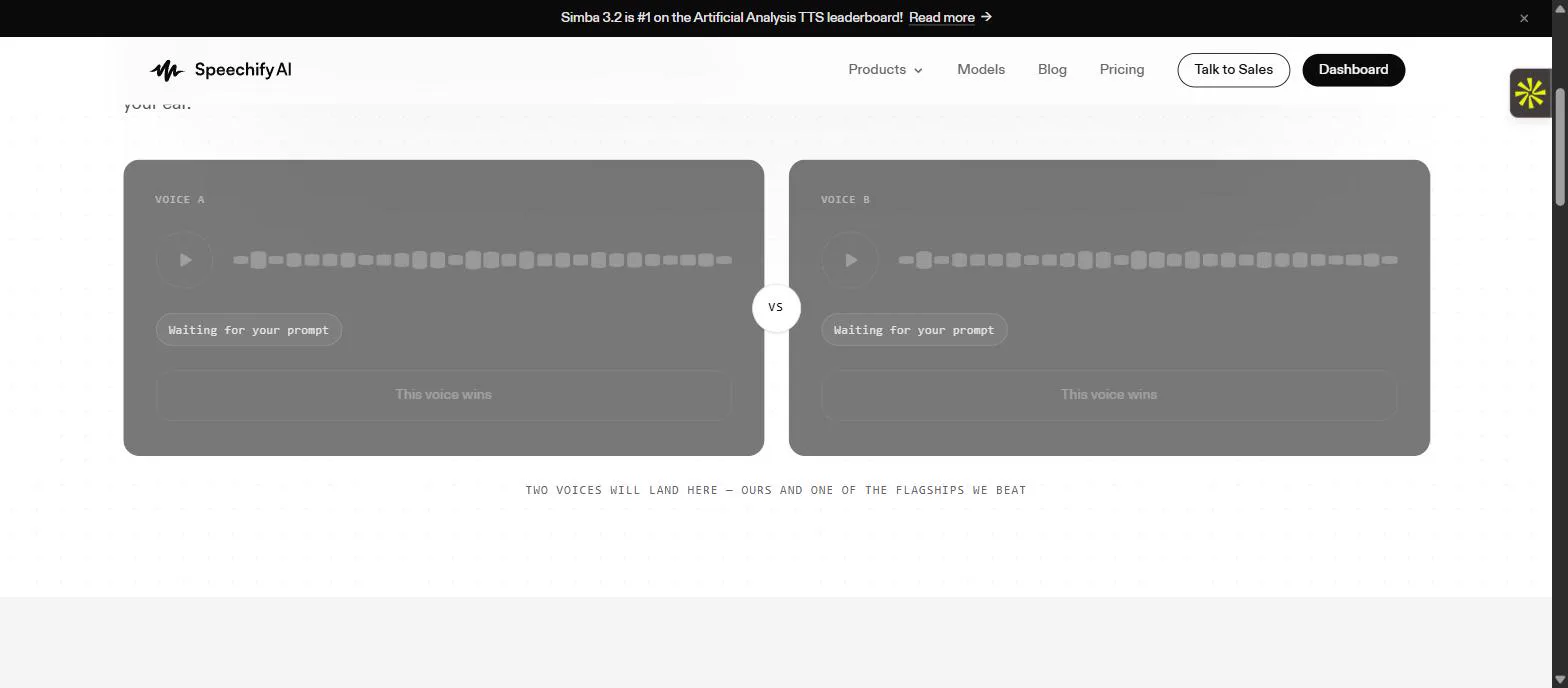
The hands-on test was the easiest of the day, because the speechify.ai homepage is itself a blind test: it plays our synthesis of a passage next to an unlabeled flagship competitor and lets you pick, no account needed.
Where SpeechifyAI most directly answers a Hume user is on expressiveness without the specialty price. Simba 3.2 offers emotion control and SSML, so the same voice carries narration, dialogue and emotional shifts, and it serves the full English voice roster, with the wider Simba catalog spanning 900+ voices across 30+ languages. Self-serve cloning from the $10 plan means your brand’s own voice is on the menu, and if you are building conversational products, all-in voice agents bundle LLM, speech-to-text, text-to-speech and telephony from $0.07 per minute rather than assembling Hume’s EVI stack yourself.
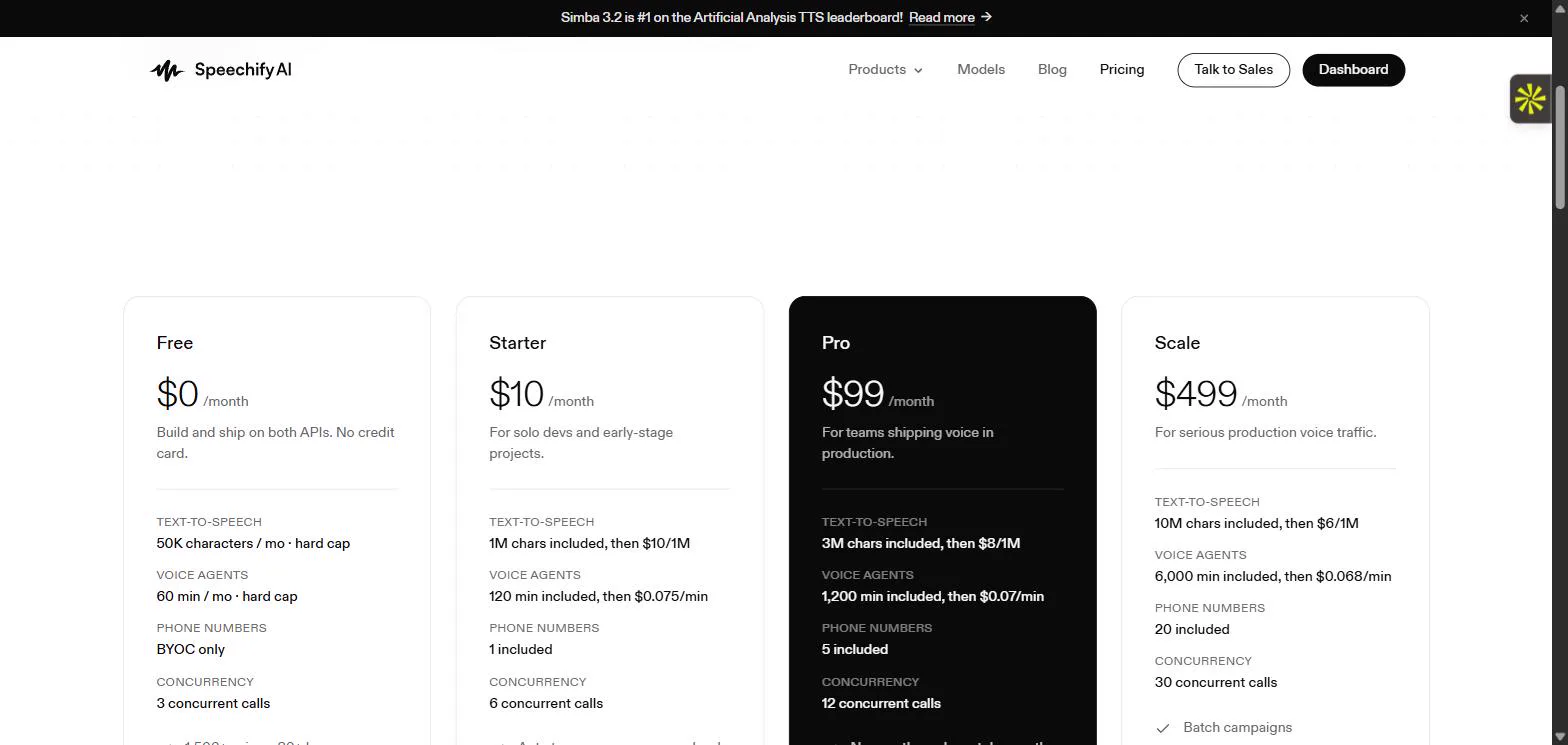
The free tier is the one I would point any evaluating developer at: 500K characters per month, commercial use included, with a hard cap instead of surprise overages. Grab a free API key and run my test sentence against Octave today; the whole evaluation costs nothing.
Pick SpeechifyAI if: you want top arena quality with emotion control and self-serve cloning, at a fifth to a fifteenth of Octave’s price, or all-in voice agents. Stay away if: natural-language emotional direction (“act sarcastic, then relieved”) and empathic speech-to-speech are literally the product, in which case Hume’s specialty is the point.
2. ElevenLabs
If what you valued in Hume was expressive range and voice variety, ElevenLabs is the broadest counter on the market: a 10,000+ community voice library, self-serve instant and professional cloning, and an ecosystem (dubbing, music, sound effects) nobody else matches. On the arena, Eleven v3 ranks eleventh (Elo 1,175), above Octave 2, so you also move up on raw naturalness.
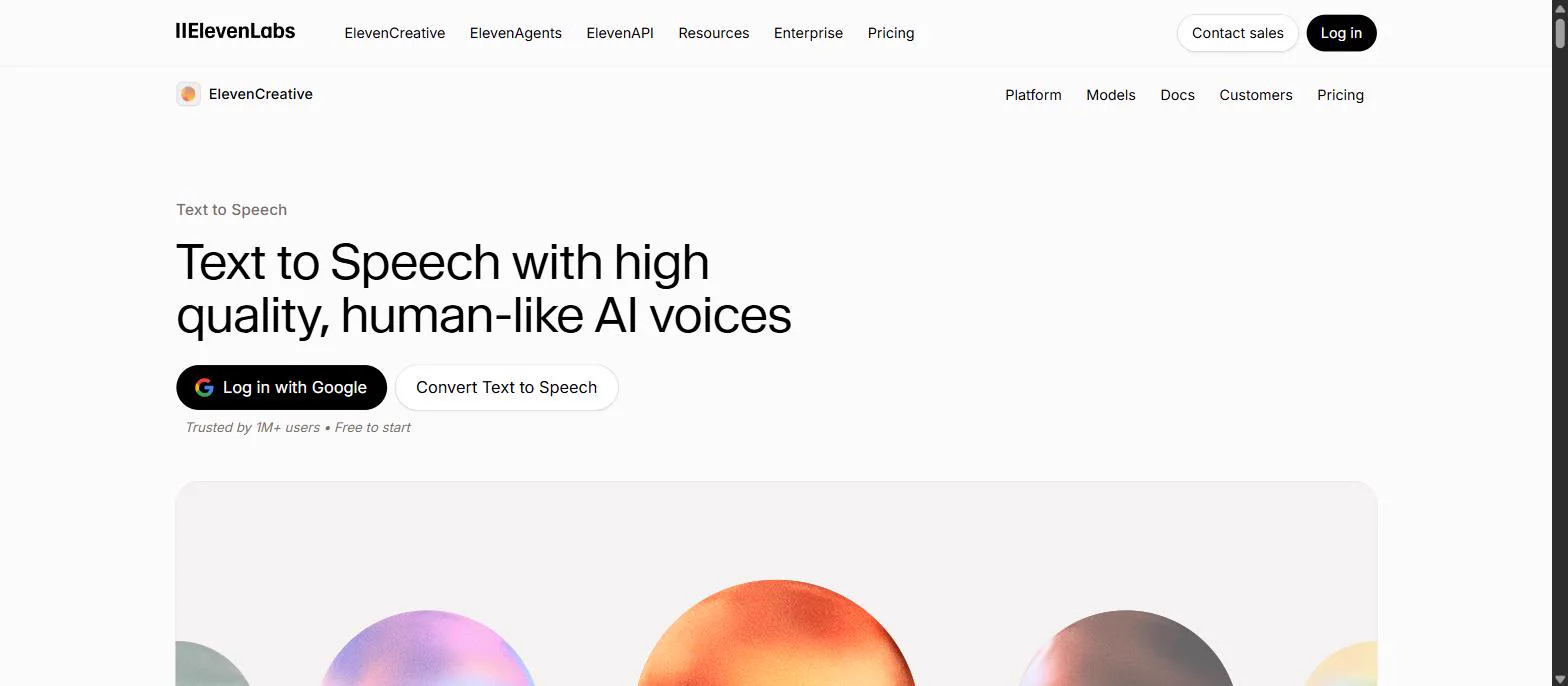
The catch is cost. The pricing page lists Flash/Turbo at $0.05 per 1K characters and Multilingual v2/v3 at $0.10 per 1K, which is $50 to $100 per 1M characters, in the same band as Hume rather than below it. And its public TTS page requires an account before you can synthesize custom text. If you are leaving Hume for voice variety specifically, our ElevenLabs alternatives guide ranks the field from that angle.
Pick ElevenLabs if: browsing thousands of character voices and a broad audio ecosystem is the point. Stay away if: you are optimizing cost per character, or arena-evaluated quality is your priority over voice variety.
3. OpenAI gpt-4o-mini-tts
OpenAI’s delivery model is conceptually the closest thing to Octave’s: alongside voice selection on the fully public openai.fm demo, you write a free-text “vibe” prompt that steers tone and emotion, much like directing Octave. I gave it my test passage with the Marin voice and a Sincere vibe, and it handled “4,096-token benchmark” cleanly, no account required.
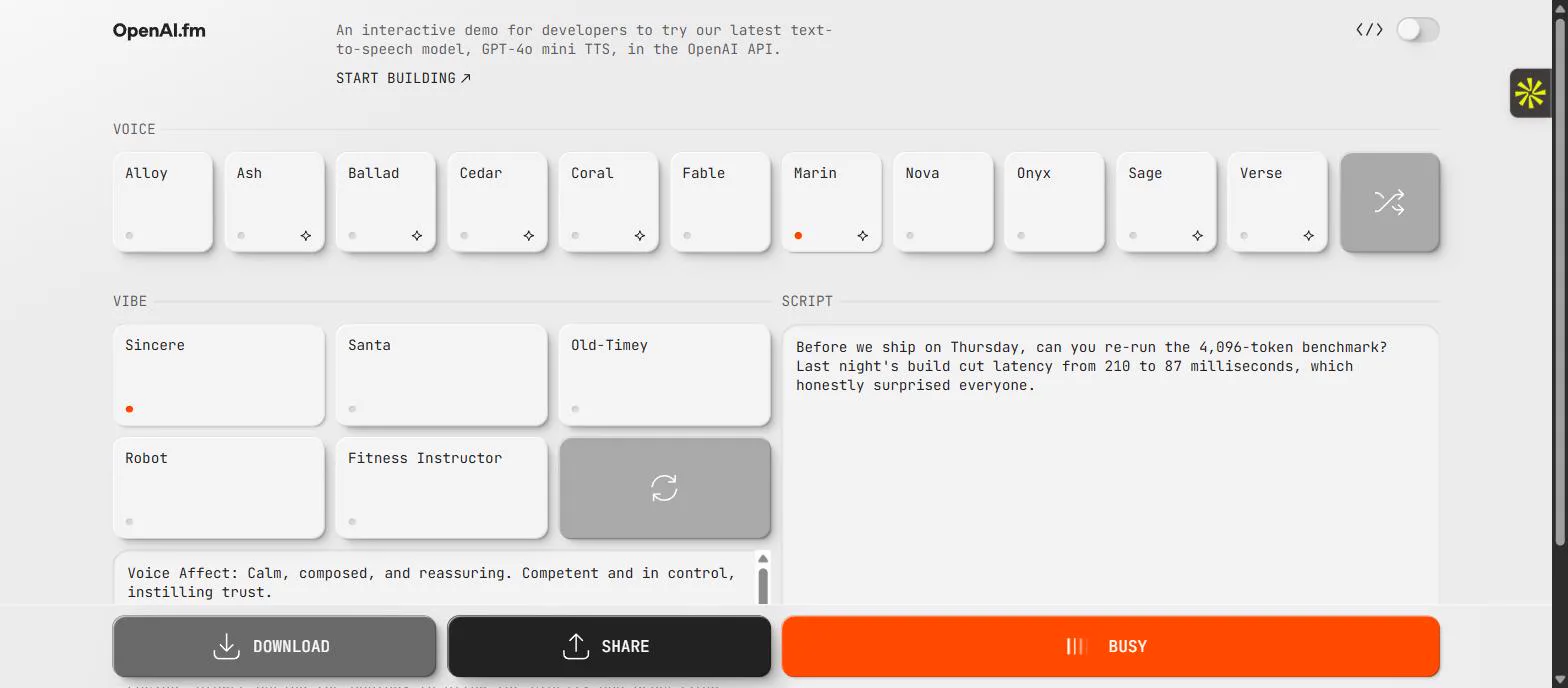
Pricing is token-based: OpenAI’s pricing page lists gpt-4o-mini-tts at $0.60 per 1M text input tokens plus $12.00 per 1M audio output tokens, with the older character-priced tts-1 at $15 per 1M characters and tts-1-hd at $30. That is well below Octave. The ceilings are eleven preset voices, no self-serve cloning, and prompt-based delivery that is expressive but not deterministic. If OpenAI is the platform you are actually weighing, our OpenAI alternatives guide ranks the same field for its users.
Pick OpenAI if: you are already on their stack and want cheap, prompt-directed speech. Stay away if: you need voice cloning, brand-locked custom voices, or arena-grade quality.
4. Cartesia Sonic
If your Hume use case was really a real-time voice agent that happened to want expressive output, Cartesia is the quality-and-latency specialist to weigh. The Sonic page claims sub-90ms model latency, and on the arena Sonic 3.5 scores Elo 1,208, well above Octave.
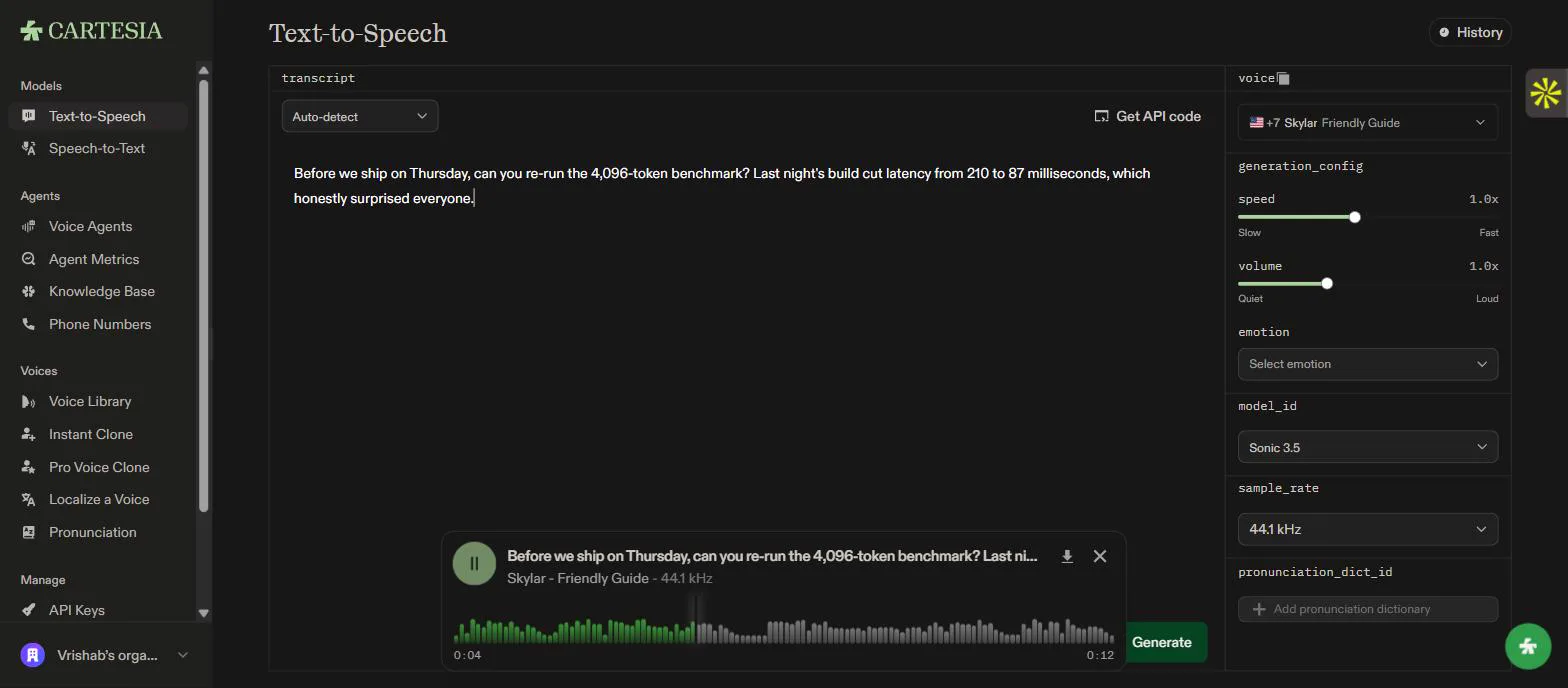
The trade-offs are credit-based pricing (Artificial Analysis normalizes Sonic 3.5 to about $49 per 1M) and a playground gated behind sign-in. It is less about emotional direction than raw quality and speed, so it fits the agent half of Hume’s audience more than the character half. Our Cartesia alternatives guide covers it in depth.
Pick Cartesia if: arena-proven quality and sub-90ms latency for voice agents are the deciding metrics. Stay away if: natural-language emotional direction is what you need, or you dislike credit-math billing.
5. Rime Coda
Rime is the contact-center specialist, pointed at high-volume phone conversations in healthcare, banking and food ordering. Its flagship Coda headlines 600+ voices across 50+ languages, and Rime leads with on-prem and VPC deployment, which matters if your empathic use case is also a regulated one.
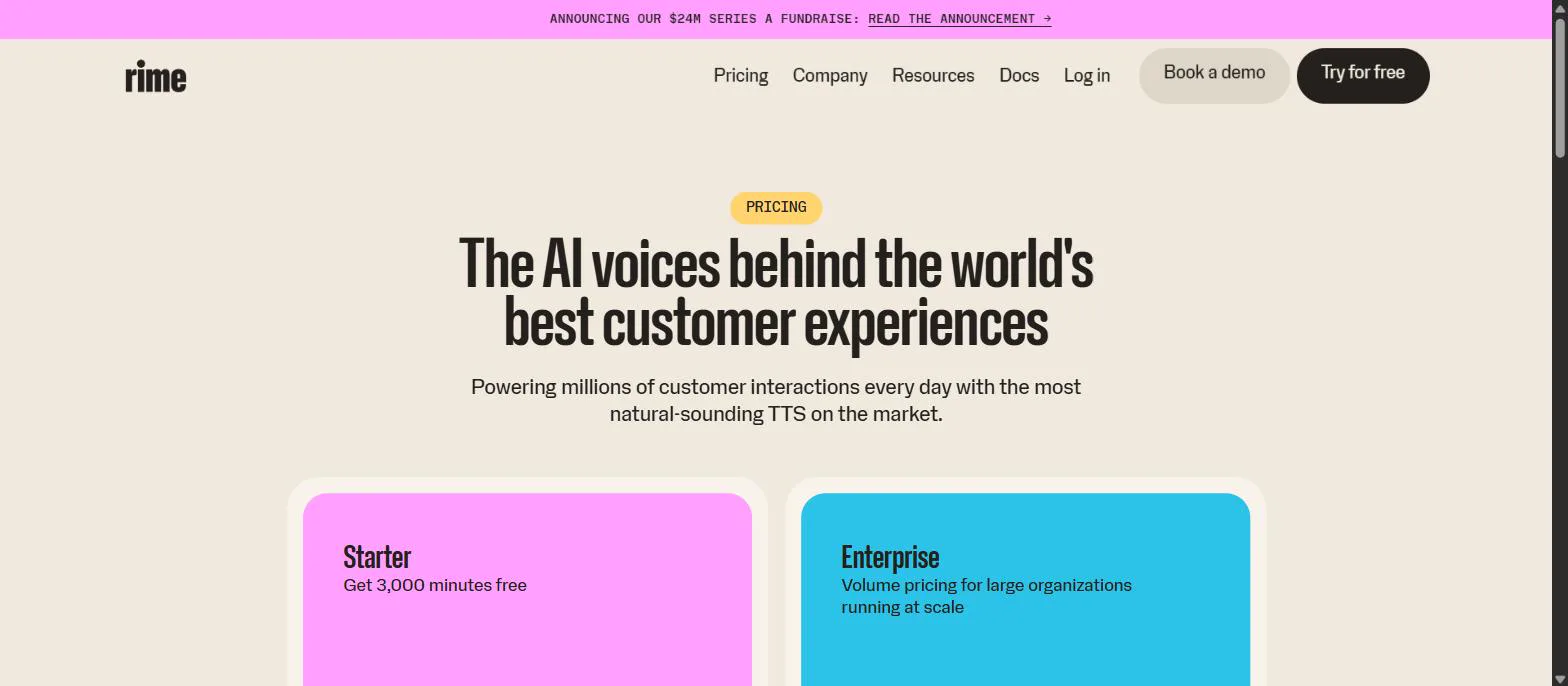
Starter pricing is $0.05 per 1K characters ($50 per 1M) with 3,000 free minutes on signup. On the arena Coda ranks mid-pack (Elo 1,042), so the reason to choose it over Octave is deployment control and telephony fit rather than expressive range.
Pick Rime if: you run regulated, high-volume contact centers and need deployment control. Stay away if: natural-language emotional direction or arena-evaluated quality is the requirement.
6. Deepgram Aura-2
Deepgram is the consolidation play: if you already use its world-class Nova speech-to-text, Aura-2 puts synthesis on the same vendor, console and invoice. Its playground previews the Aura-2 voice list publicly, though custom text needs a free sign-up, and every account gets $200 of no-card credit.
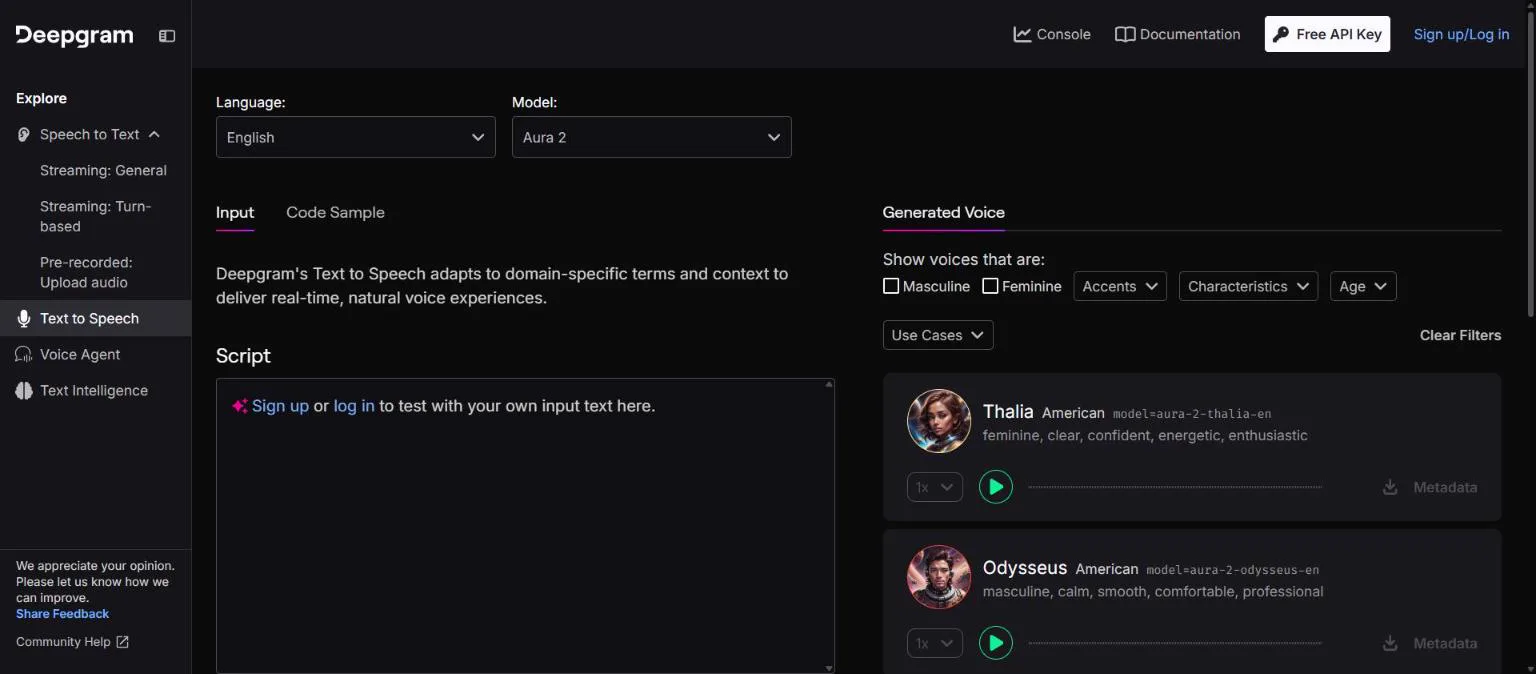
Aura-2 is $0.030 per 1K characters ($30 per 1M), below Octave, but it is the opposite of Hume in temperament: a curated, English-centric set built to sound professional on a phone line, with no self-serve cloning and no blind-arena score. If Deepgram is the platform you are weighing, our Deepgram alternatives guide ranks the field from that side.
Pick Deepgram if: you want speech-to-text and text-to-speech from one enterprise vendor with transparent pricing. Stay away if: emotional expressiveness, a large voice catalog, or a public quality score is what you need.
Also considered, and a warning about PlayHT
Google, Microsoft Azure and Amazon Polly all sell capable TTS, and if your company already lives in one of those clouds, procurement gravity may decide for you (Google’s Gemini 3.1 Flash TTS ranks third on the arena at $18.3 per 1M, a legitimately strong option). We compare them individually on our text-to-speech comparison pages.
MiniMax’s Speech 2.8 HD ranks well on the arena but at $100 per 1M chars it prices like the premium tier without the ecosystem. Inworld’s realtime models rank impressively and are worth watching if you build games or interactive characters, which overlaps with Hume’s own audience.
And PlayHT deserves its own paragraph. It appeared on virtually every “voice AI alternatives” list ever written, often as the default recommendation. Meta acquired the PlayAI team in mid-2025, and when I checked in July 2026, both play.ht and play.ai failed to resolve at all. Every team that built on it has been forced off. Treat that as the permanent footnote on this category: the voice platform you pick is a dependency, so weigh the vendor’s incentives to keep serving developers, not just the demo quality.
Which alternative fits your use case
- Expressive product voice without the specialty price: SpeechifyAI. Top arena quality with emotion control and self-serve cloning at a fifth to a fifteenth of Octave’s cost.
- Voice variety and a broad audio ecosystem: ElevenLabs, if the 10,000+ voice library is the point and you can absorb the per-character cost.
- Prompt-directed delivery on the cheap: OpenAI’s gpt-4o-mini-tts, whose “vibe” prompt is the closest thing to Octave’s direction model.
- Real-time voice agents: SpeechifyAI for one all-in per-minute rate; Cartesia if arena-proven latency is the single metric you will benchmark first.
- Regulated, high-volume contact centers: Rime, for the on-prem/VPC deployment story.
- One vendor for STT + TTS: Deepgram, with $200 of no-card credit to evaluate.
- Staying on Hume: the right call if natural-language emotional direction and empathic speech-to-speech are the product itself, and unlimited cloning on every tier is worth the specialty price.
Migrating off Hume
The practical part. TTS migrations are usually smaller than teams fear, because the integration surface is thin: one synthesis endpoint, a voice ID, and an audio format.
- Separate “emotional direction” from “a good voice.” Be honest about which you actually use. If you lean on Octave’s natural-language direction heavily, test the alternative’s expressive controls (SpeechifyAI’s emotion and SSML, OpenAI’s vibe prompt) with your real scripts before switching. If you were mostly using Octave as a nice voice, almost anything here is an upgrade on price.
- Re-map voices and re-clone. Shortlist replacements and A/B them against your current Octave output with your actual content. Cloning is self-serve on SpeechifyAI, Cartesia and ElevenLabs if you need your existing brand voice.
- Run both in parallel for a week. Per-character billing makes dual-running cheap insurance: mirror a slice of production traffic and diff quality, latency and listener feedback.
- Check SSML and timestamps. If you rely on tag-level control or per-word timing for captions and turn-taking, verify the replacement exposes them. SpeechifyAI’s API docs cover SSML and speech-marks support.
If you are weighing us specifically against Hume feature by feature, the SpeechifyAI vs Hume comparison goes deeper on the head-to-head. And the free tier exists precisely so you can rerun every test on this page yourself, including the one where you do not take a vendor’s word for anything: sign up free, no card, and your first 500K characters are on us.
The questions behind the switch.
Short answers to the pricing, migration, and product-fit questions that come up after the first side-by-side test.
- What is the best Hume alternative for text-to-speech in 2026?
- For most production TTS workloads it is SpeechifyAI: on Artificial Analysis' blind Speech Arena leaderboard (July 2026), Simba 3.2 scores Elo 1,240 at $10 per 1M characters, while Hume's Octave 2 sits mid-pack (Elo 1,056) and costs $50 to $150 per 1M depending on plan. SpeechifyAI also offers emotion control and self-serve voice cloning, so you keep the expressive direction that drew you to Hume without the specialty price.
- Is Hume Octave still worth using?
- Yes, for one thing in particular: emotional direction. Octave is built to be steered in natural language ('sound like a tired night-shift nurse delivering good news') rather than just voiced, and Hume's EVI line does full empathic speech-to-speech conversation. For interactive characters, companions and mental-health-adjacent products, nothing else on this list is aimed as squarely at the job. Voice cloning is also unlimited on every tier, including Free. It is a specialty tool, priced like one.
- How much cheaper are Hume alternatives?
- Hume's Octave TTS is plan-gated: overage runs $0.15 per 1K characters on the entry plans down to $0.05 per 1K on the $500 Business tier, which works out to $50 to $150 per 1M. Against that, SpeechifyAI charges $10 per 1M on Starter down to $6 on Scale, OpenAI's tts-1 is $15 per 1M, and Deepgram Aura-2 is $30, so savings of 2x to 15x are realistic depending on Hume tier.
- Which Hume alternative also supports emotional or expressive delivery?
- Several. SpeechifyAI offers emotion control and SSML, ElevenLabs offers a wide expressive range, and OpenAI steers delivery with a free-text 'vibe' instruction prompt much like Octave's direction model. The difference is price and, for SpeechifyAI specifically, a strong arena Elo underneath the expressiveness rather than Octave's mid-pack Elo.
- Does Hume or its alternatives have the most generous voice cloning?
- Hume is genuinely the most generous on cloning policy: it is unlimited on every tier including the Free plan. Among the alternatives, SpeechifyAI offers self-serve cloning from the $10 Starter plan, Cartesia from its $5 Pro plan, and ElevenLabs on paid tiers. If unlimited cloning at zero cost is the single deciding feature, Hume's Free tier is hard to beat, though it caps you at 10K characters a month.
Every claim should survive your own script.
The free tier is 500K characters of text to speech each month, with commercial use and no card.